Archive

Tag Archives: Constructivist teaching; Learner-centered approach

Slide1


How can we bridge the teaching/learning gap?


The evidence-based clinical practice model that I use and teach, Motivational Interviewing, is a respectful and collaborative way to talk about change with people who are ambivalent or unwilling.

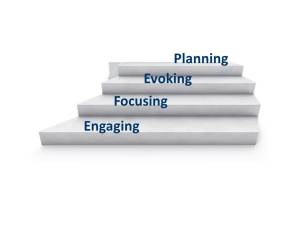
In fact, conversations about change are clearly relevant beyond counselling, therapy or health care. The new edition of Motivational Interviewing by William Miller and Stephen Rollnick outlines four essential processes that map well onto processes of adult education, particularly in contexts where learners may be less than enthusiastic. These processes are somewhat linear but also recursive –  one naturally leads to (and provides a foundation for) the next, but we may also circle backwards and forwards as needed.

1. Engaging:

This is about establishing a relationship with the group and creating a positive learning community. Is it safe to speak up, disagree, critique and explore? Meaningful discourse hinges on successful engagement.

2. Focusing:

Engagement comes first, but it is also important to understand and highlight the relevance of the topic/learning objectives to real world problems and issues. What will I learn, and why should I care? How will mastering new knowledge and skills make my work easier and better? Individuals may raise topics or issues that instructors hadn’t anticipated. These are the burning questions that need to be resolved through successful focusing. Optimally, adult learners are engaged in co-creating curricula.

3. Evoking:

Learning is 100% volitional. Constructivism and paragogy mark a shift from installing knowledge and solutions towards evoking these. Although faculty bring expertise to the table – and we shouldn’t shy away from sharing this – a motivational approach presupposes doing so in partnership with learners, and with a spirit of nonjudgmental acceptance and compassionate empathy.

4. Planning:

We’ve engaged learners in an active partnership, linked curricula to real-world issues, and evoked new connections, insights, ideas and approaches. Now what? Identifying implications for practice and committing to an action plan are key. The planning process helps bridge the gap between learning and life. If new learning has no real-world implications, then we’ve missed the boat somewhere along the way.



Will it be on the exam?

In-class exams may well be one of the most stressful – and for some, traumatic – experiences in a student’s life. This truism came front and centre last week at a certificate program I was teaching, geared to seasoned interprofessional practitioners. The varying responses to our in-class, summative, multiple-choice exam tended to cluster around the less enthusiastic end of the spectrum.

Why are exams so aversive?

One obvious reason is that they can be high stakes, as in this (admittedly oversimplified) equation:

high grades = approval + scholarship $$$ + grad school admission

Another reason may have to do with lack of autonomy: we didn’t write the exam questions, and we generally can’t know – or in many cases – anticipate – them in advance. And people inherently strive towards personal autonomy.

But I think that radical pedagogical analyses get closest to the crux of the matter, in their critical interrogation of power dynamics in the classroom, the stance of the professor as “expert”, and framing of “curricular content” (for example, Laura Béres 2008 article).

Constructivism frames learning as socially constructed by learners, where learning is meaningful and relevant to real life. In-class exams are, by nature, removed from real life and focus on content domains that the instructor sees as key.

This can be an uneasy alliance in progressive classrooms, and one that I am still struggling to reconcile… Especially in a knowledge landscape where locating information should take precedence over memorizing information (see Julio Frenk’s influential report in the Lancet, “Health professionals for a new century: transforming education to strengthen health systems in an interdependent world”).

Closing thought:

Exams do stimulate affective arousal, which is associated with enhanced memory retention. I’m just not sure that those memories correlate well with the exam content!


What to do when it’s just you and several hundred people

Big room, big crowd, big sound system. It’s all about a big performance, right? In fact, the opposite is true. In my experience, larger audiences mean that it’s even more essential to take the approach of a one-on-one conversation.

What does that look like in the context of one presenter and hundreds of participants? Here are a few tips to keep in mind:

Talk to the audience as if you were at a really great social event with a group of professionals. In other words, you are kind of on your best behavior, but you can still be spontaneous, authentic and funny.

Tell stories – lots of stories. People are hard-wired to respond to, and remember, stories, so come prepared with anecdotes and examples. These can be some combination of work, practice or personal illustrations of key points. Just keep things brief and to the point.

If you’re using slideware rely on images versus text. This is a good principle for presenting to any size group, but it’s even more relevant with larger audiences where the sightlines may not be as good from every vantage point in the room.

Audit your presentation with a non-expert who has a really short attention span (I suggest a teen-ager). What parts of the talk do they like? Where are they bored? Adjust accordingly.

Promote direct interaction using methods such as: Individual reflection (“Write down the first thing that comes to your mind in response to the following statement…”); Peer-to-peer conversation (“take two minutes and turn to the person next to you and talk about…”); Rhetorical questions (“What would you do in the following situation?”); Video or audio clips with direction (“As you’re looking at this video, here’s what to watch for…”); A call to action (“What’s one thing you will commit to practicing after this session?”).

Reflect what’s happening in the here-and now. Is the room too cold or too warm? Are people tired or hungry? Is there an interesting event that’s all over the news? Acknowledge the “meta-context” in which the session is taking place.

I love giving talks to large audiences: the dynamic energy that happens when lots of people come together is socially infectious. It’s not you versus them – you’re all in it together.


Are the most important health care competencies the ones that can’t be taught?

 What, in your opinion, are the core competencies for practitioners working with women and girls who have concurrent mental health and substance use problems?

This was the question that I posed to a group of about 100 interprofessional clinicians at a recent conference session titled “Women and Concurrent Disorders (Addiction and Mental Health)”.

I posed the question before referencing the core competency domains identified by the Substance Abuse and Mental Health Service Administration’s 2011 document Addressing the needs of women and girls: Developing core competencies for mental health and substance abuse service professionals:

 SAMHSA Core Competency Domains

Sex and gender differences

Relational approaches in working with women and girls

Family-centred needs

Special considerations during pregnancy

Women’s health and health care

Interprofessional collaboration

I was curious to hear what this group of experienced and seasoned health care providers had to say about the core competencies that were top of mind. Without hesitation, hands went up and people called out examples: 

Practitioner-Identified Core Competency Domains

Empathy

Respect

Trust

Compassion

Listening

Care

It’s striking that no one mentioned any of the SAMHSA competencies, which focus on domain-specific knowledge and skills. Rather, the areas addressed by the audience emphasized process over content. Now, this is not to minimize the centrality of scientific and clinical knowledge and skills. Healthcare consumers expect this of us, and we as professionals expect it of ourselves.

But in those moments when the group named these key areas as most important, we collectively moved to the tacit underpinnings of excellence in healthcare: the human interactions that form the basis of helping. The things that are much harder to teach – if we can teach them at all.

View the full presentation on slideshare 


Network of networks = your very own PLN


Today, there’s no problem finding information – the challenge is sifting through and locating the right information at the right time. And not just the right information at the right time – it’s also about access to tools and ideas that you never even knew you needed until you saw them. That’s where PLNs come in.

In the olden days before the advent of online academic journals and research databases, I always made at least one serendipitous discovery while browsing library holdings or leafing through print materials. I would be scanning a row of books looking for a particular call number, and suddenly notice a different book that was a great fit for some other topic I was researching. It’s hard to replicate that kind of happenstance when digital searches yield a specific document or information source with laser-like precision.

Plus, learning is not just about acquiring information – paragogy (a.k.a. the new andragogy) views learning as inherently non-linear and socially constructed via networks/peers. So PLNs – because they’re naturally hyper-textual and social – fit beautifully within a paragogical frame.

This article about PLNs at edudemic.com gives a great overview and rationale for the functions of various social media tools in building, customizing and contributing to your own composite, ongoing knowledge stream. Your very own PLN.


Your USB key is corrupted, and by the way the handouts weren’t printed


Bad deam? Worst nightmare? Or maybe the best and most productive 90 minutes possible. I’ve read that the Chinese character for crisis represents danger + opportunity, and nothing could be truer. This unwelcome scenario happened to me today when presenting to a small group of Medical Residents on the topic of Motivational Interviewing.

The moment I realized that “Plan B” (the handouts) was not an option, I decided to use (and trust!) the principles of Motivational Interviewing (captured by the acronym “A-C-E”, Autonomy, Collaboration and Evocation) as the foundation spirit for my approach. In other words, it’s all about relationships, and my primary goal was establishing a relationship with the group to help facilitate meaningful practice and learning.

So…what did we actually do? I demonstrated Motivational Interviewing skills with a volunteer who agreed to talk about physical activity and exercise as a hypothetical change goal  (a “real play” versus a “role play”). Frequent pauses, critical reflection and discussion allowed key points and clinical skills to emerge organically. In the second half of the session, the whole group participated in another activity focused on practicing – and again critically interrogating – reflective listening skills. We closed with each person articulating a specific practice goal based on their learning.

It’s all too easy to fall into the trap and habit of teaching as performing. In Motivational Interviewing I often talk about a “red flag” being when the practitioner is working harder than his or her patient; and today I was reminded that it’s energizing and affirming when the learners work harder than the instructor.

Maybe next time “Plan C” gets promoted to “Plan A”. That 90 minutes felt like freedom.


Last week I did a talk for about 60 members of the general public, for a short annual series called “Mini-Med School” offered through the University of Toronto. The title of my talk, “Alcohol: A Delightful Poison?” was meant to pique peoples’ interest in a substance that is pretty thoroughly integrated into everyday life in Western culture. The focus was on challenging assumptions and providing a few “aha” moments – we looked at standard drink conversions, low-risk drinking guidelines, health effects of alcohol, brief screening tools and treatment options.

Since didactic lecturing is counter to constructivist approaches, here are a few ways that I encouraged learning by doing in this 90 minute session:

– At the beginning and the end I invited the audience the consider 3 things: (1) A feature that resonated for me (2) A question I want to think through (3) A seed I could plant now.

– A “bar” set up at the front of the room had a white tablecloth and liquor bottles full of coloured water and empty glasses of different sizes. A volunteer bartender and customer from the audience poured drinks, while another volunteer measured. The results? The “martini” was close to 4 standard drinks; the highball glass contained just over three standard drinks, and the wine was just under one standard drink.

– I asked people to turn to the person next to them and guess the percentage of Canadian men and Canadian women who consume over 14 standard drinks in a typical week. The large-group polling revealed a massive over-estimate of Canadian drinking norms based on research data – in other words, marketing trumps science in the popular imagination.

– Q & A after each section distributed questions throughout, instead of asking people to save everything up for the end. This elicited some of the “burning questions” and relevant issues as they occurred to learners.

– When it came to exploring screening tools to see who might be at risk for alcohol-related problems, we collectively, as a large group, went through the various tools using a fictional case example (“Alex”).  This evoked some great comments and questions about the shortfalls of brief screening (sensitivity and specificity), and made the tools more relevant to real-world applications.

– We held a raffle for prizes – a few books focused on alcohol and alcohol treatment – which kept everyone in their seats until the conclusion, and helped to end the session on a high note.

– Along with the slides, I put together a “playlist” of songs related to drinking – as a way of further underlining how alcohol is culturally interwoven with relationships and experience.

It’s not easy to keep people on the edge of their seats for 90 minutes on a Thursday evening, but I felt like the group stayed present and brought home some memorable key elements and applications.

You can check out the slide deck for this talk on Slideshare…or see it on Vimeo.

Predicting the Future: Higher Education in 2112 (Part 2)

My workplace overlooks a big downtown university campus, and it’s always fun to see the frosh week excitement and back-to-school energy.

This made me think about: what will higher (university) education look like 100 years from now? Hard to imagine, especially because universities have sustained a pretty enduring business model and delivery system for – what – the last thousand years or so?

But I think we’re seeing the fault lines in higher education, some driven by students themselves and their expectations/learning preferences, some changes being driven by new technologies/social media, and perhaps the most significant changes are a result of globalization and rise of “educational megalopolies”.

So – here are some of my predictions:

This first one is kind of a no-brainer: Face-to-face learning will be the exception. Students will design and access knowledge and skills guided by both human and virtual tutors/faculty

Students will register and be affiliated with multiple academic institutions from the same family of university “brands” (as smaller schools become gobbled up by the big names)

Students will travel virtually or geographically throughout their academic careers and access a plethora of institutionally-branded choices in different metropolitan centres and online, with the entire academic record in a single transcript file location

The electronic transcript will look more like a virtual portfolio of students’ work and assessments, and will link to other accomplishments/activities

There will be no such thing as “full” courses (due to over-enrollment) because all courses will be webcast

The most successful university brands will offer programs in multiple languages: for example, English, Mandarin, Portuguese, Hindi, Russian (via automatic simultaneous translation of faculty/instructional materials)

Unique, personalized programs of study will be developed so as to fit specific jobs via proprietary algorithms (and these will be recalibrated as students’ career goals change)

Teaching performance will be graded on a variety of metrics – including student performance and feedback/reviews – and this will be integrated within mobile academic course calendars (inside-out universities).

bee flying dandylion

Lately everyone is asking “what happens after the workshop is over?”

In high school I worked as a cashier in my neighborhood convenience store. The pay wasn’t great, but at 16 what do you expect? However I got to see, over and over again, the actualization of the “let’s go to the corner store” meme: the place would be dead quiet (time to read a trashy celebrity mag cover-to-cover), then suddenly – how did all these people appear out of nowhere??? From a social anthropology perspective it allowed me to experience the “hive mind” in action.

Well, a similar phenomenon seems to be happening this summer: I am seeing a convergence in the training requests I’m getting that go beyond “can you do a one-day workshop”.  For the first time, organizations and individuals have been initiating the ask to explicitly integrate time and process on implementation during and after the course or workshop. Now, I’m not suggesting that in the past no one cared about implementation – in fact the opposite is true. It just seems like there is more attention being paid from the very beginning of the continuing professional education (CPE) process to a longer-term perspective and ultimate goal of performance improvement. This is in line with the proliferation of publications and calls for competency-based medical education, including recommendations in the 2012 “Future of Medical Education in Canada” report.

It’s exciting to me that organizations are starting to hold us educators accountable for what happens after the workshop is over. Positive course evaluations aren’t enough to demonstrate value when the real purpose of CPE is to facilitate change. And that’s a tough one. That’s why I no longer make New Year’s resolutions (they were always the same resolutions).

But the beauty of the hive mind is that it generates a certain energy. If our collective gaze (hive mind) is focused on the horizon as opposed to the windshield, I foresee some creative paragogical alternatives to “business as usual”.


1. First, forget about the teaching part. Teaching implies that you have a modicum of control over what people are learning. Nice as that sounds, it’s simply not true. Individuals learn or don’t learn. It’s really up to them.


2. Pay attention to the whole person, and multiply by the number of students in your class. They are: (grand)parents, sons, daughters, workers, travelers, artists, builders, athletes, collectors and teachers. They have amazing stories to tell. They honour you by being present.


3. Put yourself last. In other words, it’s about them not you. Their needs, their experience, their enjoyment, their comfort, trust, connection.


4. Stimulate curiosity and pique peoples’ interest. People value knowledge and skills that help them solve a problem or make some part of their lives easier or better. People also get engaged when they have a chance to examine and challenge their own or others’ assumptions, knowledge, values, ideas and beliefs. That includes your assumptions, knowledge, values, ideas or beliefs.


5. Make it fun. Children learn by playing, experimenting, risking and testing limits. So do adults.


6. Inspire further learning. It’s axiomatic that “the more we learn, the more we realize how little we know” (to paraphrase Socrates). In other words, it’s not so much the content that you cover in a class or workshop, it’s the gift of inspiring even one person to want to learn and practice more. Learning isn’t a single event – it’s a continuous process – so the goal is to initiate or inspire a continuation of that process.


7. And last but not least: don’t take it personally. Not everyone is in the right place at the right time for the right reasons. Learner autonomy means just that –and sometimes learning takes time to germinate. A long time. I guess that’s called wisdom?


When the audience is tired, maybe it’s time to…

Today I learned about breaking rules and going with the flow. In almost 20 years of teaching, I have never abandoned a class to go shopping, but somehow on this Friday afternoon during a Toronto heat wave, it just seemed like the right thing to do.

I was facilitating a session on health promotion and prevention with a small group of international practitioners, who are in Toronto for a two month research institute. In spite of lots of activities and a pretty committed group of learners, two hours into our three-hour session I could see that attention was waning. I saw that I had two choices:

–          Keep plugging ahead despite clear evidence of information overload on the part of the learners (their curriculum includes lots of early starts and late evenings of meetings and work)

–          Abandon ship in favour of a field trip.

Our class was about 3 minutes from the University of Toronto bookstore, which happens to have a wide array of U of T-branded everything-you-can-imagine (great souvenirs of Toronto), and is located in a grand brick building at the centre of the U of T campus.

So, we agreed to end the day on a high note. Everyone found something to take home, and just as important, I found out that flexibility in teaching sometimes means knowing when it’s time to stop (and shop).

DSC_0057

Remain a beginner always in teaching (and learning)

Clinical education can be a challenge given the diversity of learners’ experience, standpoint, discipline, areas of interest and perceived relevance of the topic. My approach to this blog is similar to my approach in working with health practitioners: regardless of how many months, years or decades of experience we bring, an open mind and willingness to learn are the key attributes to help take knowledge and skills to the next level.

The title of this blog post was inspired by Garr Reynolds‘ book The Naked Presenter, where he talks about applying the principles of Zen to presenting and facilitating. These include simplicity and authenticity, as well as keeping an open mind. Here is a Zen story about bringing an empty cup to the learning context:

A scientist went to visit a famous Zen master. While the master quietly served tea, the scientist talked about Zen. The master poured the visitor’s cup to the brim, and then kept pouring. The scientist watched the overflowing cup until he could no longer restrain himself. “It’s overfull! No more will go in!” the scientist blurted. “You are like this cup,” the master replied, “How can I show you Zen unless you first empty your cup?”
Lately, I have been using this story to kick off a training or workshop by asking for a volunteer from the audience to read the story, and then inviting the group to collectively reflect on the implications for the work that we are going to do together. It’s a nice way to “level the playing field” when there is a mix of new versus seasoned practitioners – especially as those who are newer to the topic often feel constrained from contributing and participating actively. Underlining the reality that we are all engaged in a continuous process of learning and development – regardless of skill level – affirms the value of every voice.
Connecting and engaging the group at the start is essential in any presentation or educational session, and I like how the concept of “first, empty your cup” sparks peoples’ interest and immediately communicates respect and equity. As George Bernard Shaw said, “In the right key one can say anything, in the wrong key, nothing. The only delicate part is the establishment of the key.” A strong start helps establish the right key.