Archive

Post-secondary Education

candle tin dark

No one likes to feel incompetent, but how else can we learn?

Last week I had a conversation with a student (not one of mine) who approached me because she was struggling with an essay she had to write. The obvious question is “Why not go to your instructor to talk about this?” In response, she described how the author’s key points in the literary theory text that she was referencing were hard to grasp, and raised more questions than they answered. The material was so challenging that she was having trouble even framing clear questions. Because she prided herself on being a bright and engaged student, she felt like her inability to wrap her mind around this complex and highly abstract material would colour her instructor’s regard for her abilities. In other words, she valued his positive approval and she didn’t want him to conclude that maybe she wasn’t that smart after all.

Are you thinking “high achiever”?!

In the midst of our discussion two things became apparent:

1. Whether as instructors, managers or supervisors, we invariably tell students/staff/clinicians to come to us when they’re in difficulty. I’m certain that the instructor in this case told his students on numerous occasions that he’d be glad to connect with them outside of class.

2. What we don’t always do is lay the groundwork to make it possible for others to come to us with their questions, concerns or issues. This example made me wonder…what more could the instructor have added to create a climate in which students felt 100% safe to risk looking foolish, clueless, unthinking (and all of the other labels we often apply to ourselves when we’re in the weeds). And what more could I be doing in this area?

It’s a human trait to want others to think well of us. Yet paradoxically, it’s hard to advance our knowledge and skills without venturing into the realm of not-knowing. Our willingness to shine a light on our weaknesses or knowledge/skill gaps might just be the biggest determinant of success!

The next time I hear myself say, “Please feel free to come to me with any questions that you have”, I’m going to add something along the lines of:

“It can be hard to shine a light on things you’re not so good at, but how else do you get good at them? If you’re feeling less-than-competent that’s fantastic – it means you’re learning! What can I do to make you feel totally at ease approaching me?”

Of course, creating a climate of mutual trust takes more than a couple of sentences – it’s a way of being, communicating unconditional positive regard and respect. But making a point to explicitly affirm the value of positive risk-taking might help tip the balance when others are struggling.

Now back to the student – as she talked more about her ideas and interpretations of what she had been reading, she was able to answer most of her own questions. And then I shared my own learning (see above) with her.

Another good lesson: we all possess a powerful innate wisdom. And we all benefit when a caring other takes the time to evoke it.

DSC_0069


What do I want to be when I grow up? For a large proportion of high school students, now is when that question gets real.


Which program? Which college or university? What are the admission requirements and will my grades be good enough? Applying to undergraduate and graduate degree or diploma programs can be stressful, especially the dreaded “Personal Statement” in which applicants must respond to a series of questions in 3000 characters or less.

For example:

What makes a good citizen?

How will you make the best of your experience at this institution?

What are your future career plans and aspirations?


These are big questions, and it can be daunting to frame a concise, compelling and well-written response. Yet the Personal Statement is a golden opportunity to differentiate oneself from the rest of the pack. Here are some ‘best practice’ tips to get you started.

  1. If the inspiration just isn’t coming, start typing anyhow. Don’t judge or polish – just write from your heart and see what comes out. You will yield some nuggets of gold to work with, and better yet, you will have made a start! (sometimes the hardest part is starting)
  2. Draft your responses in a text file instead of typing directly into the online form. What if you were to accidentally press “submit” before you’re done? Better to write, edit, spell-check, word count and then copy/paste online when you’re ready.
  3. Ask someone else to look over your responses and offer suggestions/feedback. Just make sure that your own authentic voice shines through. And, this probably goes without saying, but under no circumstances ‘borrow’ (i.e. plagiarize) content from online or other sources.
  4. Check online for the institution’s Mission Statement, and take this into account in framing and tailoring your responses.
  5. Give at least one concrete example from your own experience that illustrates your response to each question. You can draw from past participation in school clubs or sports, hobbies or interests, volunteer work, employment, travel, or books/art/music/poetry that has inspired you. If you have a website, blog or YouTube channel with original content, that might also be worth highlighting. Don’t underestimate or discount the many things that make you special!
  6. Last but not least, stay positive. We don’t always succeed in life the first time we try (or the second, or the third…). I’m inspired by this list of 50 famous people who failed at their first attempts at career success.

Related

The 3 steps to success in school (and life)

Student tips: How to get good grades

Why convocation is #awesome

Stay gold


SoTL Summary Image Nest


A conceptual framework for SoTL offers a map to knowing, valuing and acting


The scholarship of teaching and learning (SoTL), is, by definition, public versus private, susceptible to peer review and critique, and can be built upon by others (Charbonneau, 2010). But what does SoTL look like? What’s the “roadmap”? A conceptual framework can illuminate and guide how we frame and understand academic scholarship in the context of 21st Century post-secondary teaching and learning.

I’ve been thinking about an integrated framework that incorporates SoTL knowledge, learning and growth, as well as ways of knowing, valuing and acting as academic teachers, learners and scholars. Two recent models seem complementary and enrich one-another when viewed in combination: Randall et al. (2013) focusing on overlapping and dynamic elements of teaching and learning scholarship, and Kereliuk et al. (2013) with a slightly broader conceptualization of 21st Century teacher knowledge.


Framework for the Scholarship of (21st Century) Teaching and Learning

SoTL Framework


Randall’s original framework represents three overlapping and dynamic elements of teaching and learning scholarship: (1) knowledge of scholarly teaching; (2) learning about one’s teaching; and (3) growth in SoTL. The three domains are represented in a Venn diagram, with points where the domains intersect/overlap. For example, where (1) knowledge of scholarly teaching meets (2) learning about one’s teaching, we see enhanced faculty engagement and motivation. Where (2) learning about one’s teaching meets (3) growth in SoTL we see increased commitment and professional academic/scholarly identity. Where (3) growth in SoTL meets (1) knowledge of scholarly teaching we see concrete SoTL performance and/or action. Finally, the central convergence point of all three domains represents SoTL transformation.

In the integrated model, foundation knowledge (such as teaching skills and digital, research and cross-disciplinary literacies) maps onto the domain of scholarly teaching broadly. Humanistic knowledge (which includes ethical/emotional awareness and diversity competence) corresponds to and enriches the domain of learning about one’s teaching. Finally, meta knowledge (such as creativity and innovation, problem solving and critical reflection, and communication and collaboration across disciplines) relates to faculty growth in SoTL.

I like how, when integrated, this framework affirms multiple and diverse ways of knowing and being.

With all that said, no roadmap is perfect – any GPS user who has been misdirected by the computer navigation guide will attest to that. We are continuously mapping and remapping physical and geographic terrains, and the same holds true for conceptual mapping of the terrains of knowledge, development and application.

A work in progress, like life itself, and our individual and collective learning journeys.


hallway


A simple shift in perspective can transform dialogue and engagement


Today I got to shake hands with over 300 students. No, it wasn’t convocation – it was kind of the opposite of convocation. It was…the annual College Information Fair.

That’s when hundreds of (mostly) high school students pour into a massive convention centre by the busload, and let loose on aisles of kiosks and pavilions, each promoting specific academic institutions and programs. Some students were 100% clear about their post-secondary journeys, some expressed uncertainty about which school to attend. Others candidly acknowledged that they didn’t have a glimmer of an idea about where they wanted to head after high school. Some were leaning toward a program that wasn’t going to get them to their ultimate career destination, and many were just there to hang out with friends and pick up some free swag.

Last year I approached my role with the primary objective of offering information about the academic programs that I administer. This year, I decided to try a slightly different approach, more in line with motivational interviewing, where the goal is to evoke versus educate. In other words, instead of asking potential students “How can I help you?” / “What would you like to know?”, I opened the conversation with a couple of questions designed to briefly elicit each person’s “big picture” goals before honing in on the specifics of a particular program of study.

Instead of… I asked…
How can I help you? What programs are you interested in?
What would you like to know about Program X? What made you decide that you’re interested in Program X?
What other questions can I help with? Where do you see yourself in terms of your ultimate goal or career?
Here’s some additional information… Can I share how Program X (and/or Y and/or Z) might fit with your goals?

The results were amazing. Because many teenagers aren’t the most voluble conversationalists, our interactions were brief but much more meaningful than the conversations that I held last year. Students were engaged, they felt heard and affirmed, and for many who were unsure about their future, a couple of follow-up questions (“What kinds of courses in high school captured your interest most?” “If you could have any job, what would it be?”) helped them to clarify some possible directions. I also heard some amazing stories and made deeper connections.

And from a purely selfish perspective, at the end of the day I too felt energized. I felt like I contributed more than what’s written in the academic calendar!


welcome woodburned


Learning is up to the learner, but teaching is up to the teacher


It’s one thing to teach, and quite another to learn. Learning is up to the learner, not the teacher. Just like the old saying: “You can lead a horse to water, but you can’t make him drink.”

But…here’s the thing: You can make him thirsty!

So the question is, how do we create environments that make learners “thirsty”? In other words, how can we foster learner engagement? Herewith, my personal Top 10. Some are prosaic and some can be incredibly challenging. And that’s a good thing, because we are all learners and we’re all teachers.

1. Start as you mean to go on: Begin every workshop, class, course, etc. with a question. Establishing right at the outset that our learning journey will be collective and collaborative is key, and especially early on I make a point of explicitly praising and otherwise rewarding any and all signs of positive engagement on the part of individuals/groups.

2. Incentivize participation: We want learners to take risks and make mistakes. When a person volunteers for something high risk, reinforce the desired behaviour. I don’t advertise it ahead of time, but whoever comes to the front of the room to do a role play with me is going to go back to his or her seat with some small token. It doesn’t even really matter what it is (think $ store).

3. Provide normative feedback: Using in-class mobile polling or an audience response system (like iClickers) lets learners compare their own knowledge/opinions/beliefs/assumptions with others in the room.

4. Establish relevance: Learners what to know “what’s in it for me?” Creating learning activities that help people bridge curricula to their own lives = good. Co-constructing learning activities that address/solve real-world problems = better.

5. Show your sense of humour: It’s hard to be serious all the time. Make it fun and mix it up! Shared laughter builds group cohesion.

6. Affirm autonomy: Let’s face it. Some days we are more fired up than others about our life’s work, and it’s no different for our students. When individuals or groups just don’t seem to be getting on board, I find that stating out loud (with 100% sincerity and with 0% judgement) that how/when/if folks engage is entirely their choice seems to free up some good energy for engagement.

7. Deploy multiple “engagement channels”: Individuals come to learning environments with a range of different learning preferences and a range of preferred ways of participating and engaging. Some people like the limelight, others need time to process and formulate a thoughtful response, and many are more comfortable sharing in a smaller group. The more choices we can offer about how to participate the better, including: verbal/written, large group/small group, synchronous/asynchronous, classroom-based/online, and more.

8. Evoke affect:  Research about emotion (affect), memory, and implications for learning suggest that teaching needs to go beyond engaging at a purely intellectual (cognitive) level, and touch peoples’ feelings (for example, Sylwester, 1994; and more recent perspectives that encompass academic technology and affective/cognitive learning, Calvo & D’Mello, 2011). Create learning activities that pair new knowledge and skills acquisition with positive affect, like surprise, delight, excitement, curiosity for deeper and more durable learning.

9. Show them you care: Authentic care and concern can go far in building good will and fostering mutual respect and support for one another’s learning and achievement.

10. And last but not least – know when to break the rules (and go ahead and break them). Like the time I called it a day and took the group shopping. 


Related articles

Five Reasons why Reality TV is not a Waste of Time: How reality TV can inform teaching best practices

Seven Essentials for 21st Century Education and Teaching: Stuff it took me 20 years to learn and I’m still trying to figure out

Rules of Engagement: The “Top 4” preconditions for learner engagement


large pink flower


What’s the difference between education and learning?


“Education is what others do to you. Learning is what you do to yourself.”


Amy J.C. Cuddy


what if collage


Learning how to learn and deciding how to decide


We are all lifelong learners, and this has got me thinking about the learning that occurs outside of formal, post-secondary classrooms via the series of decisions, big and small, that comprise each person’s life path. In clinical/professional practice, critical judgment and decision-making are key, and we get to hone these skills every day in the multiplicity of choices that we are continuously called to make.

Sometimes the implications and outcomes of making one choice over another are clear; but a lot of the time there’s mighty thick cloud cover. On those occasions I have found myself wishing for a crystal ball to foresee the results of a specific decision before I decide. And maybe some future convergence of digital technology and computing (“the singularity”) will offer an uber-intelligent clarity and vision to better inform which direction to take. But at this time we pretty much weigh our options and just do the best we can.

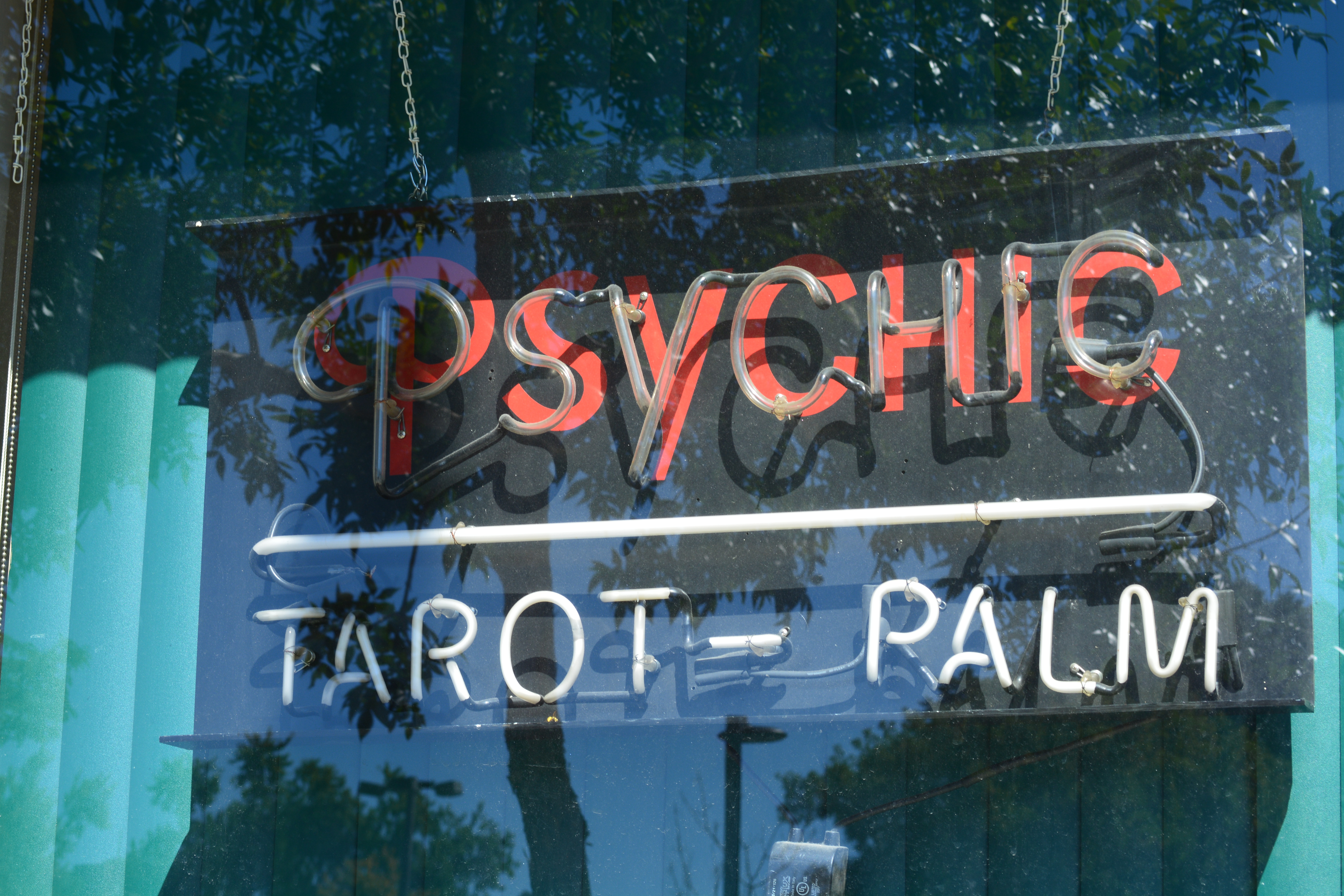
psychic advisor sign


So, I’ve been wondering…is life’s learning trajectory essentially based on how we navigate through our own individual series of crossroads? For example…


We have to make many decisions without benefit of much experience or perspective to guide us:

Which high school? What’s after that? What’s my career path? How do I approach parenting? Do I choose to be a parent?


Some decisions are made either by default (inertia, status quo), or because we are willing to take a chance and leap into the unknown:

Start a relationship or end the relationship? Take the job or leave the job? Stick close to home or move to a whole new place?


Some decisions can be heartbreaking, and represent a lack of positive choices at all:

Do I pay the rent or feed the kids? Support the family or get an education?


And many crossroads test our own moral compass and integrity:

Should I speak out or follow the pack? Stand up and take action or do nothing?


crossroads house


The chaotic complexity of an individual’s inward/outward subjective experience and learning is never still. Each person’s journey accretes a unique composition and form. And every decision point at every crossroads iteratively informs the ones still to come.

Through this lens, effectively teaching professional decision-making might rest on our ability to come alongside learners, and link our vast, collective landscape of lifelong learning with discrete and situational reflective practice. In other words, the ultimate “meta crossroads” are learning how to learn and deciding how to decide. Over and over. Each and every day.


tree reflection in puddle


speech bubble social media


Fostering instructional immediacy in online classrooms


How can we create online learning environments that are as dynamic, collaborative and successful as the best face-to-face classrooms? Is it even possible? My own experience in online graduate teaching over the past 12 years suggests an emphatic “yes”. Or, should I say, an emphatic “yes, but…”.


Just as there are multiple and diverse classroom-based teaching approaches (some more successful than others in engaging learners and mobilizing knowledge transfer), there are as many ways and means of online instructional approaches. All students, regardless of the learning platform, engage best when they experience high instructional immediacy. That is, a sense of warmth, caring, support and positive regard in the learning environment.


A recent book focused on online teaching in the health professions (Melrose, Park & Berry, 2013) offers tips on creating and maintaining instructional immediacy in online settings, and it’s validating to see many of my own approaches and strategies reflected.


Here are 10 tips for how online instructors can project warmth and likeability (instructional immediacy):


1. Post a positive and supportive welcome message to greet students the first time they log into the course and each week thereafter


2. Share online bios (pictures are a bonus) (students and instructor)


3. Create smaller sub-groups for online discussion and reflection on course materials and assignments (8-10 students is optimal in my experience)


4. Include short (< 5 minutes) videos introducing course topics and offering tips and key learning to personalize each week’s focus


5. Assign “learning buddies” among students in the course to structure collaboration and collegiality


6. Have early and ongoing online conversations about process (versus course content)

What is it like to be in this course?

What are you looking forward to, and what is one thing you are concerned about?

How can we challenge each-other in ways that foster debate and dialogue but still feels respectful and affirming?

How can I (instructor) help maximize your learning and value from this course?


7. Set clear expectations in the Course Syllabus about online participation (my expectation of students is at least one original post per week, and at least two replies to other students’ posts per week)


8. Offer targeted encouragement at points in the course where motivation may be flagging (e.g., right after Reading Week, towards the final weeks of the course)


9. Use intentional word choices in online communication with students:


 Thumbs down  Thumbs up
The focus of this course is… Our course will focus on…
You will be required to… We’ll be working together to accomplish…
Students’ feedback has indicated… The conversation in our group this week has highlighted…


10. End the course with an explicit call to action – How does the learning in this course fit into the bigger picture of students’ learning trajectories and career goals? (here’s an example)


Student course evaluations attest to the possibility of online learning as a fun, rigorous and enriching alternative to face-to-face contact. Here are some representative student comments from the course evaluations for the 2014 online course I taught, both positive and negative (but comments overwhelmingly slanted toward the positive):

The instruction was very clear and very intellectually stimulating. The video clips were very well presented and made the instruction seem not virtual at all.

I enjoyed the online format of the course. I feel the online discussion help my learning and I benefit more from these discussions than in-class ones.

I really didn’t like the fact this course is online. I feel that I could have learned a lot more by having a classroom environment and participating through talking instead of writing
weekly reflections just because I had to.

Excellent, the most involved and interactive online course I have ever taken. I felt very engaged and connected to the instructor, students and material.


As students increasingly orient themselves to rich digital communication and sharing, this teaching/learning platform is aligned with what our students are already doing in their day-to-day lives. Not every student, but lots of our students.


Related:

Much ado about online learning

The three most important tips for teaching online

6 tips for facilitating webinars 


airplane wing 2


You’ve earned more than a piece of paper


Convocation ceremonies are always inspiring, and today’s was no exception. Many students opt to forego the pomp and speeches. But graduation represents an important transition, and one worth celebrating.

big time. Most things of value do. The financial costs are considerable, and so are the sacrifices along the way: family, free time, hobbies and interests, early mornings and late nights. And at the end of this particular journey comes the deep satisfaction of a thing completed.

There is always the next mountain to climb, but while all those other names are called out, after you’ve walked across the stage and shaken lots of hands, it’s a nice place to sit for awhile and enjoy the view. You’ve earned it.


Toy Circus


Stuff it took me 20 years to learn – and I’m still trying to figure out


1. Learning is volitional. It cannot be mandated. We can teach, but each person decides for him- or herself what will be absorbed and integrated.


2. What’s taught in the classroom is only the starting point for knowledge-acquisition and skill mastery. Deep learning happens when class is over – the space for real world application and practice.


3. Motivation to learn influences how much work a person is willing to put into self-directed learning and mastery.


4. People are most motivated to learn things that are of direct interest and relevance.


5. Motivation is a state, not a trait. Motivation is largely a product of how we (instructors) engage students.


6. We can amplify students’ engagement by giving them an authentic and substantive voice in co-creating curricula.


7. Paragogy and heutagogy, emerging theories of teaching and learning, point to decentred learning, self-determination, and peer-to-peer learning as core to 21st Century education.


What might paragogical teaching look like in a post-secondary classroom? In this Acclaim interview with Maegan Stephens (Public Speaking as an “Interactive Democracy”), Professor Stephens describes how:

I give them a ballot of issues to vote on, including the content of the speeches they will give, how they will be graded, and class policies on cell phone use and on attendance. I also ask them if they would prefer to spend class time doing activities, watching speeches, hearing me lecture, or a combination.

I try to ask as more as more of a moderator and facilitator than as a lecturer. This kind of interaction, advances the aspects of debate and speaking oriented pedagogy on day one. It is not so much about flipping the classroom as it is about reversing the authority and changing the professor student dynamic, and encouraging my students to take more responsibility for their classroom.


Love it. Can’t wait to try it.


limes


You know when it’s your first time, but not always when it’s your last


This morning I had the pleasure of handing out awards of distinction to about 100 college students. In addition to their regular coursework, each had the option to take it further and demonstrate achievement and competency to the highest standard. This had no bearing on their actual course grade and was totally voluntary. “Winning” this award is not a competition – except with oneself.


The fact that such a high proportion of students were motivated to excel in the first place was inspiring. It reminded me that when students are engaged, they will work far beyond our expectations (and the requirements on the course syllabus).


What was the secret ingredient that resulted in this level of uptake and motivation? I think the heart of it is that these students felt truly cared for by their teaching faculty. They perceived corrective feedback as having the best of intentions. They kept striving to succeed knowing that someone really believed that they could.


After the awards were distributed I was asked to say a few words to the group. These were students from across all academic semesters; some new to the program and some in their final weeks before graduation. I asked them who was attending the ceremony for the first time? And who was there for the last time? And I reflected that we don’t always know when it’s our last time.


While first experiences are clear and often memorable, we don’t always know (as this group did) when it’s the last time we have a chance to: learn, do our best, say what we really feel, take a risk, show compassion, dig deep. Or, we figure it out long after that “last time” is past.


All of those students did the semester like it was their last time. I bow down to that.


Neon game


Follow these 10 tips for good grades…and improved learning


1. Read the course syllabus carefully. Keep it handy throughout the term and check it weekly to be sure you’ve completed all of the required readings and assignments.


2. Anticipate that there will be stressful periods in the academic term. Put assignment due dates into your calendar, and set interim goals for completing larger projects. If you don’t have or use a personal calendar, now is the time to get started to help you plan ahead.


3. Make a point of contributing in every class, even if it’s just to ask (versus answer) a question. This helps the instructor get to know you personally and signals that you’re actively involved and trying hard.


4. Take notes, even if the instructor posts slide decks to the course website. Notes help you absorb new information, and they complement slide decks and readings. Note-taking is an important skill and takes practice; the more you do it, the more effective and useful your notes will be for you.


5. Check in with the instructor if you aren’t sure of anything. Better to find out ahead of time, than via a low grade due to a misunderstanding on your part about course content or assignments. Don’t be shy – faculty genuinely want their students to succeed and are eager to help.


6. If you are emailing your instructor, be sure to communicate like a professional. That means using correct spelling and a somewhat formal tone. (Also, keep in mind that if you send the faculty an email Friday afternoon you might not hear back until the following Monday.)


7. Before submitting ANY written work, double (triple) check your spelling, grammar, syntax, formatting. If writing is not your strength, access a tutor to help with editing.


8. Keep in mind that if you’re struggling in the course, that’s not necessarily a bad thing. We all struggle when we’re learning new things. And learning new stuff is why you’re in school.


9. If you are REALLY struggling, ask for help. Is it because of the course content? Other things happening in your life? Time management? A health or mental health problem? There are lots of supports available to students through educational institutions and in the community – but they only work if you access them.


10. Last but not least, follow three simple steps for success in school (and in life).


http://www.flickr.com/photos/gabbymarcuzzi/7125458745/


Take a moment and consider…who was your absolute favourite teacher?


What was it about him or her that had such an impact? What was so memorable about this person’s qualities and behaviours?


Chances are that a name and a face came to your mind immediately. Even after more years than I care to say, I still remember Mr. Bolland, my high school English teacher. His sense of humour, his love of literature, his patience in the classroom and respect for students made me keen to come to class. He was inspiring. Chances are, these are some of the qualities that you also recall so vividly.


I’ve used this activity, contributed by Dr. Carolina Yahne as a resource for the Motivational Interviewing Network of Trainers (MINT), in my own clinical courses and workshops as a way to evoke the “spirit” of Motivational Interviewing. This includes the principles of partnership, unconditional acceptance, accurate empathy, autonomy support and compassion.


The fact that people experience the “favourite teacher” exercise so universally and so similarly underlines the impact that educators (and others!) can have on a someone’s life. People remember most of how we make them feel (as opposed to what we say), and I like to remind myself that each and every student represents an opportunity to make a positive difference.


Happy Assorted Biscuits


How well do we integrate all three in our teaching/learning environments?


On a Porter Airlines flight the other day I read an interview with branding guru Ron Tite in the in-flight magazine, re:porter. In the article, Tite notes that you can add value to consumer and corporate brands in three ways: via education, inspiration or entertainment (ideally combining all three).


This got me thinking about teaching and learning tools, and the extent to which we educators successfully integrate each of the elements (education, inspiration, fun) into our classroom delivery and student engagement strategies.


The education part implies some form of didactic instruction. Easy enough. Inspiration is harder, and often arises from hands-on practice – whether through student interactions, simulation, critical analysis or collaborative learning. What about fun? How do we build in play, humour, joy, excitement, passion? Attending to the meta-learning environment, fostering a sense of community, safety, risk-taking and engagement would seem to be preconditions for having fun in the classroom. As does the extent to which I’m enjoying myself too. It seems to me that a combination of all of these elements is integral to transformative learning.


We talk about scaffolding learning to help engineer success experiences for students. Let’s also consider how to scaffold learning to engineer fun experiences!


Halloween Topiary


What’s not to like about putting on a costume and knocking on strangers’ doors for free candy?


I grew up in a low-candy household, so when I was a kid, October 31st was my chance to stock up for the year. As fellow witches, ghosts and monsters dropped away one by one, I persevered alone carrying a heavy white pillowcase, trudging on until I achieved a self-imposed quota of sugary provisions. Months later, in the heat of an August day, lying on my bedroom floor desultorily reading an Archie comic, I would find a mass of dusty and melted candy forgotten underneath the bed.


The lessons learned?

Candy tastes really good. Scarcity makes things more appealing and desirable. Too much candy, after a while, doesn’t taste so good. A surfeit of that which is most desired siphons the magic away…Until months pass, autumn leaves turn, and the cycle continues anew.


I resolve to apply the following lessons learned from childhood to my teaching:

Don’t give out more than students want: “To teach well we need not say all we know, only what is useful for the pupil to hear”.

Make learning appealing and desirable (and fun).

Awaken others’ minds to the places where their knowledge is scarce (because that will make them want it even more).

In the end, the one who wants it most will trudge on after all others have had enough or given up.

and

There may be such a thing as too much Halloween candy, but there’s no such thing as too much knowledge.