Last week I did a talk for about 60 members of the general public, for a short annual series called “Mini-Med School” offered through the University of Toronto. The title of my talk, “Alcohol: A Delightful Poison?” was meant to pique peoples’ interest in a substance that is pretty thoroughly integrated into everyday life in Western culture. The focus was on challenging assumptions and providing a few “aha” moments – we looked at standard drink conversions, low-risk drinking guidelines, health effects of alcohol, brief screening tools and treatment options.

Since didactic lecturing is counter to constructivist approaches, here are a few ways that I encouraged learning by doing in this 90 minute session:

– At the beginning and the end I invited the audience the consider 3 things: (1) A feature that resonated for me (2) A question I want to think through (3) A seed I could plant now.

– A “bar” set up at the front of the room had a white tablecloth and liquor bottles full of coloured water and empty glasses of different sizes. A volunteer bartender and customer from the audience poured drinks, while another volunteer measured. The results? The “martini” was close to 4 standard drinks; the highball glass contained just over three standard drinks, and the wine was just under one standard drink.

– I asked people to turn to the person next to them and guess the percentage of Canadian men and Canadian women who consume over 14 standard drinks in a typical week. The large-group polling revealed a massive over-estimate of Canadian drinking norms based on research data – in other words, marketing trumps science in the popular imagination.

– Q & A after each section distributed questions throughout, instead of asking people to save everything up for the end. This elicited some of the “burning questions” and relevant issues as they occurred to learners.

– When it came to exploring screening tools to see who might be at risk for alcohol-related problems, we collectively, as a large group, went through the various tools using a fictional case example (“Alex”).  This evoked some great comments and questions about the shortfalls of brief screening (sensitivity and specificity), and made the tools more relevant to real-world applications.

– We held a raffle for prizes – a few books focused on alcohol and alcohol treatment – which kept everyone in their seats until the conclusion, and helped to end the session on a high note.

– Along with the slides, I put together a “playlist” of songs related to drinking – as a way of further underlining how alcohol is culturally interwoven with relationships and experience.

It’s not easy to keep people on the edge of their seats for 90 minutes on a Thursday evening, but I felt like the group stayed present and brought home some memorable key elements and applications.

You can check out the slide deck for this talk on Slideshare…or see it on Vimeo.

Predicting the Future: Higher Education in 2112 (Part 2)

My workplace overlooks a big downtown university campus, and it’s always fun to see the frosh week excitement and back-to-school energy.

This made me think about: what will higher (university) education look like 100 years from now? Hard to imagine, especially because universities have sustained a pretty enduring business model and delivery system for – what – the last thousand years or so?

But I think we’re seeing the fault lines in higher education, some driven by students themselves and their expectations/learning preferences, some changes being driven by new technologies/social media, and perhaps the most significant changes are a result of globalization and rise of “educational megalopolies”.

So – here are some of my predictions:

This first one is kind of a no-brainer: Face-to-face learning will be the exception. Students will design and access knowledge and skills guided by both human and virtual tutors/faculty

Students will register and be affiliated with multiple academic institutions from the same family of university “brands” (as smaller schools become gobbled up by the big names)

Students will travel virtually or geographically throughout their academic careers and access a plethora of institutionally-branded choices in different metropolitan centres and online, with the entire academic record in a single transcript file location

The electronic transcript will look more like a virtual portfolio of students’ work and assessments, and will link to other accomplishments/activities

There will be no such thing as “full” courses (due to over-enrollment) because all courses will be webcast

The most successful university brands will offer programs in multiple languages: for example, English, Mandarin, Portuguese, Hindi, Russian (via automatic simultaneous translation of faculty/instructional materials)

Unique, personalized programs of study will be developed so as to fit specific jobs via proprietary algorithms (and these will be recalibrated as students’ career goals change)

Teaching performance will be graded on a variety of metrics – including student performance and feedback/reviews – and this will be integrated within mobile academic course calendars (inside-out universities).

Book Cover


Will e-books ever fully replace the real thing?

I get the convenience and portability of e-readers and tablets, but this week end I was reminded of why I love print media in bound paper form.

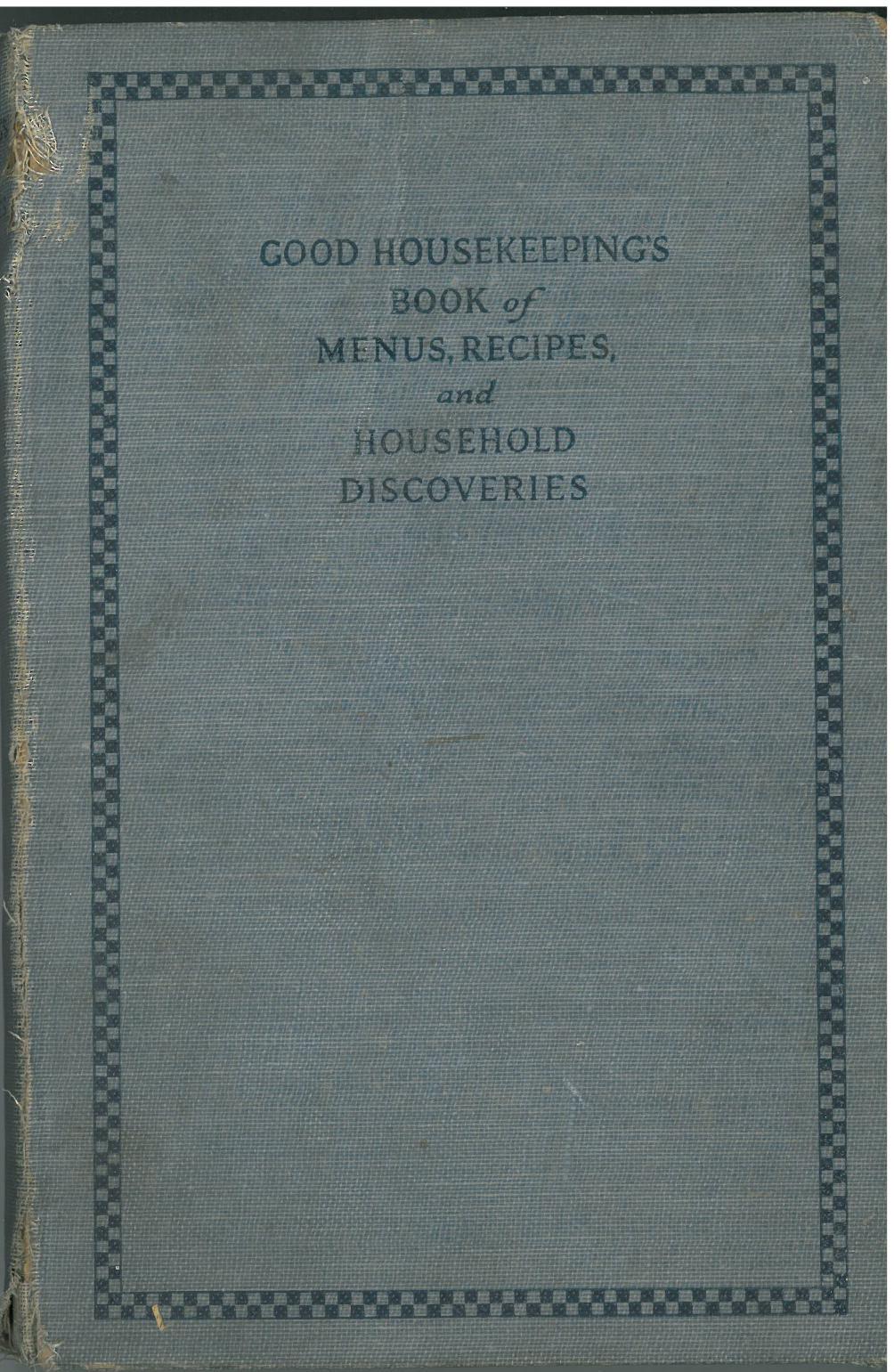
There’s a second-hand bookstore that I love in east Toronto. You know the kind – stacks of books from floor to ceiling on every possible topic. I was perusing the collection of older and antiquarian books and was charmed by a 1922 edition of Good Housekeeping’s Book of Menus, Recipes and Household Discoveries.


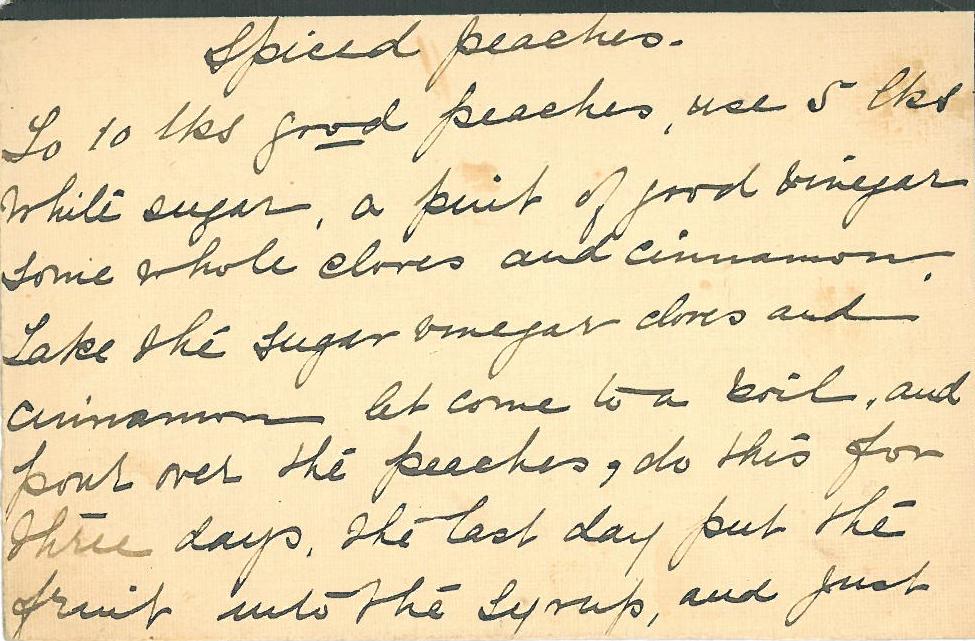
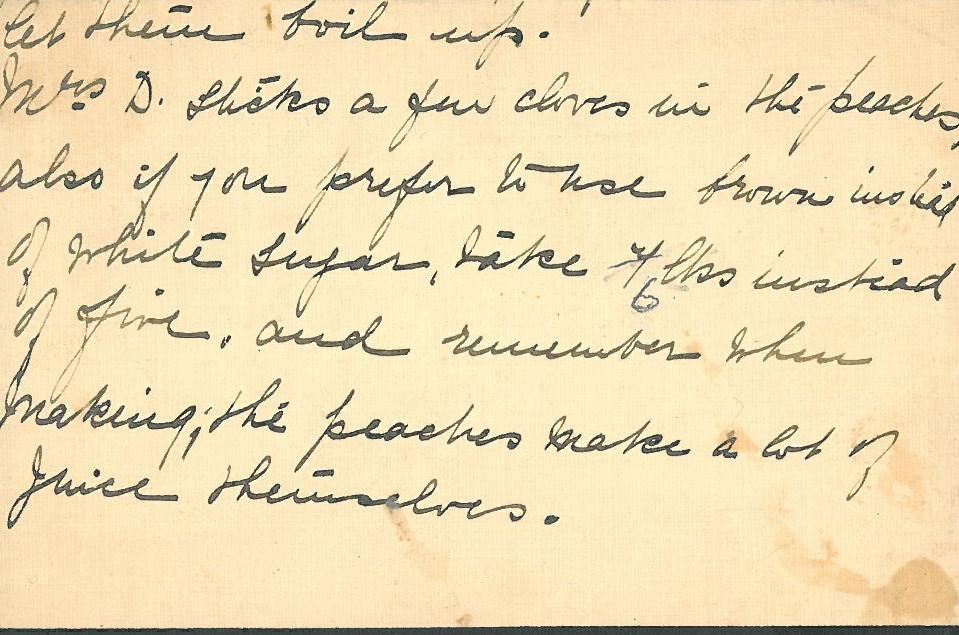
This volume is a treasure trove of miscellany and arcane household tips, and came packed full of ephemera (old newspaper clippings, treasured recipes in spidery handwriting, and even some vintage labels for fruit preserves).


Here is a sample menu provided for a Tuesday in September ( a couple of recipes follow) – enjoy!

BREAKFAST

Bananas

Ready-to-eat Cereal     Top Milk

Chipped Beef of Toast

Coffee

LUNCHEON

American Beauty Salad        Mayonnaise

Raisin Bran Bread Sandwiches

Grapes

Wafers     Iced Chocolate

DINNER

Stuffed Steak        Mashed Potatoes

Spanish String Beans

Turnips Hollandaise

Fresh Peach Pie

Coffee

bee flying dandylion

Lately everyone is asking “what happens after the workshop is over?”

In high school I worked as a cashier in my neighborhood convenience store. The pay wasn’t great, but at 16 what do you expect? However I got to see, over and over again, the actualization of the “let’s go to the corner store” meme: the place would be dead quiet (time to read a trashy celebrity mag cover-to-cover), then suddenly – how did all these people appear out of nowhere??? From a social anthropology perspective it allowed me to experience the “hive mind” in action.

Well, a similar phenomenon seems to be happening this summer: I am seeing a convergence in the training requests I’m getting that go beyond “can you do a one-day workshop”.  For the first time, organizations and individuals have been initiating the ask to explicitly integrate time and process on implementation during and after the course or workshop. Now, I’m not suggesting that in the past no one cared about implementation – in fact the opposite is true. It just seems like there is more attention being paid from the very beginning of the continuing professional education (CPE) process to a longer-term perspective and ultimate goal of performance improvement. This is in line with the proliferation of publications and calls for competency-based medical education, including recommendations in the 2012 “Future of Medical Education in Canada” report.

It’s exciting to me that organizations are starting to hold us educators accountable for what happens after the workshop is over. Positive course evaluations aren’t enough to demonstrate value when the real purpose of CPE is to facilitate change. And that’s a tough one. That’s why I no longer make New Year’s resolutions (they were always the same resolutions).

But the beauty of the hive mind is that it generates a certain energy. If our collective gaze (hive mind) is focused on the horizon as opposed to the windshield, I foresee some creative paragogical alternatives to “business as usual”.


Continuing Professional Education in 2112


Predicting the future is a risky and uncertain business, despite what psychics and fortune-tellers might proclaim. Still, I’ve been thinking about science fiction transformed into reality by the successful landing of NASA’s Curiosity Mars explorer vehicle. How many years before the first humans embark on the six-month journey to another planet? All this wondering has inspired me to consider what continuing education might look like a century from now.

So here goes – some predictions for continuing professional education:

The focus of continuing education requirements for professionals will shift away from accumulating a set number of accredited CPE course hours, and reflect an assessment of the richness and density of practitioners’ electronic networks and their contributions within and beyond these networks

The primacy of skills in researching and locating information will be replaced by skills in creating/designing an individualized architecture to harvest, sort, store and share essential knowledge and ideas

There will not be slideware

Knowledge Curator will be a popular job title

The CV will be replaced by a tag cloud or an infographic resume with active links to relevant media, and this will be a more accurate reflection of professional contributions and experience

Education will be evaluated based on net benefit to learners in practice, and this will be possible at low cost due to the proliferation of mlearning applications and integrated performance databases

Didactic lectures will still exist, but they will look more like (high production value) TV commercials and less like (low production value) infomercials. They will be a lot shorter too.

For fun – here is a tag cloud for this website updated October 2012:

1 lion stonework


Take a deep breath, pretend you’re not defensive, and say thank you


You feel like your presentation is going well, the group is on board, and then someone says (in not the most collegial tone), “Excuse me, but I already know all this stuff – are we going to be covering anything new today?”

What now? How to quickly get back on track?

We can’t always predict peoples’ behaviour, but it’s safe to assume that sooner or later we will be challenged, no matter how accommodating, engaging, well-prepared and genuinely nice people we are. I developed the acronym “TAMERS” as an easy way to remind myself to slow down in these kinds of situations, and to respond with poise and professionalism. Here are the steps, followed by an illustrative example.

Thank the person asking: This is the opposite of what we generally feel like doing when we’re challenged; however we can be genuine in thanking the person for two reasons: (1) Suddenly the whole audience is paying attention, and audience engagement is always a good thing. (2) As a rule, if one person expresses dissatisfaction or disagreement, he or she is not alone. That person has just done you a big favor by giving you some valuable in-the-moment feedback. So say “thanks” with sincerity.

Acknowledge their experience/ commitment/ willingness to take a risk: Adults come with pre-existing knowledge, experience and wisdom, and it pays to acknowledge that openly and bring it into the curriculum.

Mirror the question or comment back: Mirroring or reflecting back accomplishes three things: (1) When we are challenged in front of a group, suddenly our defenses get activated and we aren’t able to think or hear as clearly as usual. Mirroring makes sure that we’ve accurately understood the message – this is critical because it helps avoid the “No, that’s not what I meant” trap. (2) Mirroring back lets the other person know that he or she has been understood. This communicates respect and tends to de-escalate any combative or hostile tendencies on the part of the audience member. (3) A good reflective statement tends to elicit a “yes” response from the other person. So now you both agree about at least one thing, and this paves the way to finding even more common ground.

Extrapolate to a broader context or principle: If you can generalize the specific statement to a broader value, something that the whole group can get behind, it is easier to respond and find solutions.

Respond to the question or comment: The above steps have prepared the ground to respond to the person’s challenging question or comment. Responding right away (without first Thanking, Acknowledging and Mirroring) can come across as defensive and can even escalate the situation.

See what others think and check back: It’s always a good idea to bring it back to the whole group and invite different perspectives. That includes audience members who agree with you – and it is more palatable to the “challenger” to hear disagreement from another group member than from the presenter.

Here is an example of “TAMERS” in action, using the challenging statement from the beginning of this post:

Audience member: “Excuse me, but I already know all this stuff – are we going to be covering anything new today?”

T: Thanks for speaking up and sharing your concerns,

A: I’m guessing that you aren’t the only person in the group that is feeling this way.

M: So you’re saying that this information is pretty much just a review – and not a very helpful one at that…

E: Everyone here has taken their valuable time to be here today, and I’m committed to making this an outstanding learning experience.

R: I wonder if it would be helpful to take a couple of minutes to talk about what you and others were hoping for, and how we can accomplish that.

S: (to the group) What do you think?

And if all of the steps seem like a lot to remember, it still works if you take out the vowels and make it “TMRS”:

T: Thanks for speaking up and sharing your concerns,

M: So you’re saying that this information is pretty much just a review – and not a very helpful one at that…

R: I wonder if it would be helpful to take a couple of minutes to talk about what you and others were hoping for, and how we can accomplish that.

S: (to the group) What do you think?

Important note: TAMERS will work for you if you are willing to really engage the other person and the group in an open dialogue. It’s not about manipulating or “tricking” the person into agreeing with you; but rather it is a set of strategies to help ground a productive response in the moment.

Good luck and feel free to share how this works for you!


A video lecture that could have been a lot better if only…

Last week I did a 30-minute, video-recorded lecture for a community service organization. I figured that the format would be similar to my past experience: stand at the front, speak to the audience, and a camera set-up at the back of the room recording the presentation. No way, not this time!

For one thing, there was no projector to display my slides to audience (I worked hard on those slides). No questions from the group either – there was no audience microphone. Just a close-up of me talking, trying not to look down at the laptop positioned just below the camera frame. In retrospect I wish I had:

–          Made ZERO assumptions and asked more questions beforehand about set-up

–          Used Prezi (to map out the talk and not have to rely on changing slides)

–          Kept things way simpler = more compelling.

On the other hand, I’m glad that I:

–          Tried to keep the tone conversational

–          Asked rhetorical questions for individual reflection

–          Periodically paused to summarize key concepts/messages.

No doubt I’ll get some more tips when I see the rough cut, but in the meantime the “make zero assumptions” rule seems to be one lesson I just keep learning.


1. First, forget about the teaching part. Teaching implies that you have a modicum of control over what people are learning. Nice as that sounds, it’s simply not true. Individuals learn or don’t learn. It’s really up to them.


2. Pay attention to the whole person, and multiply by the number of students in your class. They are: (grand)parents, sons, daughters, workers, travelers, artists, builders, athletes, collectors and teachers. They have amazing stories to tell. They honour you by being present.


3. Put yourself last. In other words, it’s about them not you. Their needs, their experience, their enjoyment, their comfort, trust, connection.


4. Stimulate curiosity and pique peoples’ interest. People value knowledge and skills that help them solve a problem or make some part of their lives easier or better. People also get engaged when they have a chance to examine and challenge their own or others’ assumptions, knowledge, values, ideas and beliefs. That includes your assumptions, knowledge, values, ideas or beliefs.


5. Make it fun. Children learn by playing, experimenting, risking and testing limits. So do adults.


6. Inspire further learning. It’s axiomatic that “the more we learn, the more we realize how little we know” (to paraphrase Socrates). In other words, it’s not so much the content that you cover in a class or workshop, it’s the gift of inspiring even one person to want to learn and practice more. Learning isn’t a single event – it’s a continuous process – so the goal is to initiate or inspire a continuation of that process.


7. And last but not least: don’t take it personally. Not everyone is in the right place at the right time for the right reasons. Learner autonomy means just that –and sometimes learning takes time to germinate. A long time. I guess that’s called wisdom?


Presenting in less-than-optimal surroundings

Awhile ago I was invited to facilitate a session for about 160 people over two days. I flew in the night before, and that first morning discovered that we would be spending our time in a…gymnasium. Set up with… garden furniture (the white plastic kind). Gyms really echo, especially with a sound system. I probably knew that already but it has been awhile since I’ve been to a high school dance. 

It can be discouraging when the learning environment is less-than-optimal, but the learning experience is what people are looking for, and it’s their overall experience that really counts and adds value.

Here are a few “Dos” and one “Don’t” when presenting in imperfect environments:

– Less-than-optimal surroundings mean that you are going to be working even harder to keep the group’s energy up. I suggest starting the day with the best coffee that you are capable of finding. For example, this one by twoifbysea bakeshop (see above)

Tune in to the group. How are they feeling? What do they want to do next? What matters to them? You do this anyway, but do it even more mindfully when you’re in a gym and the air conditioning doesn’t work too well.

– Keep a brisk pace by switching things up every few minutes. In other words, shift the focus away from the physical environment through meaningful activity and involvement.

Express gratitude that a group of people who have lots of other things to do chose to spend the day with you, and with each-other.

– And finally, never, ever complain about the room (or the furniture). Not to the organizers, not to the group, not even to yourself. It is what it is. Sometimes, that’s just how we roll.


Pushing the boundaries of education theory – A hurricane at our backs

How are teaching and learning theories evolving to take into account the opportunities and advances in social media and “Web 2.0”?

Andragogy, as a theory of adult learning, has been around since the 1980s, extending the notion of pedagogy to an adult learning context (Malcolm Knowles, discussed in a chapter I wrote on online learning theory).  I have been thinking about what a “2.0” conceptualizing of andragogy might look like, given the incursions of user-generated content into both live and online learning contexts. Two recent models – paragogy and heutagogy – have captured my attention as useful extensions of Knowles’ adult learning theory. These models may well constitute a kind of “Androgogy 2.0.”

Both paragogy and heutagogy present a model of learning that is (1) decentred, (2) non-linear, (3) peer-led and (4) self-determined. These characteristics map onto social media applications and the democratization of knowledge and information. Paragogical and heutagogical approaches also extend traditional adult learning frameworks through their emphasis on meta learning, or learning how to learn.

A new model for health care education is needed at this time for a number of reasons:

The explosion of evidence-based information in health care means that “just in time” learning may be more helpful and important than “just in case” learning.

Patient access to – and use of – internet-based health information means that providers need to understand how to access, assess, critique, and translate credible sources of information.

The new generation of learners are already “hyper-learners” (i.e. non-linear in their approach to accessing and processing information), and are accustomed to generating as well as consuming content.

Power dynamics in the classroom are already shifting towards learner-as-consumer, with all of the attendant opportunities and pitfalls that we are seeing. On one hand, learning is volitional, so it makes intuitive sense that learners should be autonomous and self-determining. Shifting the power dynamics in the classroom in favour of the learner can facilitate many-to-many communication and crowdsourcing. On the other hand, our educational structures and institutions are not set up to accommodate radically student-centred approaches, and as faculty we can find ourselves caught in the middle.

So what are the practical implications for clinical education? I have been experimenting with student-centred assignments and activities, as well as peer evaluation and use of social media, and the going is not always easy. The preconditions of psychological safety and willingness to risk are key, and I find that these strategies take considerably more of my time in coaching and reassuring. However based on students’ feedback, there is a depth and richness to the learning that goes beyond instructor-centric approaches.

In any case, when it comes to radically student-centred approaches to 21st Century health care education, “We’re not walking into a headwind, we have a hurricane at our backs.”


View a presentation on the topic of “Andragogy 2.0: Introducing emerging frameworks for teaching and learning: Paragogy and Heutagogy” on Slideshare


How Reality TV can inform teaching best practices

There is no in-between when it comes to Reality TV: either you love it or you hate it; and what little television I watch consists almost entirely of the few cheesy reality shows that come with basic cable.  Rationally, I understand that the scripting, editing and staging in these shows creates what is mostly an illusion of spontaneity and real life, but there is something genuine in peoples’ approach and responses that sustains my interest. Whether you are fan or foe of the genre, Reality TV can teach at least five compelling lessons that relate to presentations and facilitation:

1. Performance anxiety is a given – it’s how you handle it that matters. We’ve all seen people psyche themselves out, even before they’ve set foot on the stage. Negative self-talk, dwelling on the discomfort of anxiety, or just wanting to “get it over with” are major pitfalls in delivering an effective and engaging presentation. The people who succeed seem to be the ones who adopt a matter-of-fact attitude towards their anxiety without wallowing in it. They are also the ones who, if they choke, just keep going with courage and determination. The audience is rooting for you – they want you to succeed!

2. You can’t fake authenticity. Some people are immediately likeable, and in large part that’s because we feel like we are seeing the real person. Audiences connect to presenters who are 100% present and 100% themselves. Carl Rogers talks about genuineness in therapy and in education, as do Roy and Jeannette Henderson in their book, There’s No Such Thing as Public Speaking. Recasting presentation as conversation versus performance links us directly to the audience.

3. Evoking emotion is the most powerful way to engage an audience. New learning is “stickier” when it’s accompanied by some emotion – think about your earliest childhood memories: they are likely the situations in which you experienced strong feelings (whether great happiness, intense fear, excitement, etc.). Telling a story as an illustrative example is a good way to evoke emotion. So is asking the audience to share their own stories and examples.

4. Willingness to risk engenders respect and models deep learning.  People respect others who are courageous enough to step outside the comfort  zone – and that place is exactly where we want learners to go. Deep learning happens when we enlarge our awareness of what we don’t know and risk trying out new approaches and skills. Facilitators who model this create safe yet dynamic learning contexts and communities.

5. Basic human kindness is foundational. The people who demonstrate kindness, respect, compassion and humility are the ones we want to have on our team and as mentors. Learning happens over time, so ideally we want to foster an ongoing relationship with learners premised on mutual regard and trust. And even if the good guy/girl on the show doesn’t always win the prize, they tend to come off rather better than the folks who compromise their ethics and integrity in the process.

I’m pretty sure there’s more, but Hell’s Kitchen is queued up on the PVR.


When the audience is tired, maybe it’s time to…

Today I learned about breaking rules and going with the flow. In almost 20 years of teaching, I have never abandoned a class to go shopping, but somehow on this Friday afternoon during a Toronto heat wave, it just seemed like the right thing to do.

I was facilitating a session on health promotion and prevention with a small group of international practitioners, who are in Toronto for a two month research institute. In spite of lots of activities and a pretty committed group of learners, two hours into our three-hour session I could see that attention was waning. I saw that I had two choices:

–          Keep plugging ahead despite clear evidence of information overload on the part of the learners (their curriculum includes lots of early starts and late evenings of meetings and work)

–          Abandon ship in favour of a field trip.

Our class was about 3 minutes from the University of Toronto bookstore, which happens to have a wide array of U of T-branded everything-you-can-imagine (great souvenirs of Toronto), and is located in a grand brick building at the centre of the U of T campus.

So, we agreed to end the day on a high note. Everyone found something to take home, and just as important, I found out that flexibility in teaching sometimes means knowing when it’s time to stop (and shop).

DSC_0057

Remain a beginner always in teaching (and learning)

Clinical education can be a challenge given the diversity of learners’ experience, standpoint, discipline, areas of interest and perceived relevance of the topic. My approach to this blog is similar to my approach in working with health practitioners: regardless of how many months, years or decades of experience we bring, an open mind and willingness to learn are the key attributes to help take knowledge and skills to the next level.

The title of this blog post was inspired by Garr Reynolds‘ book The Naked Presenter, where he talks about applying the principles of Zen to presenting and facilitating. These include simplicity and authenticity, as well as keeping an open mind. Here is a Zen story about bringing an empty cup to the learning context:

A scientist went to visit a famous Zen master. While the master quietly served tea, the scientist talked about Zen. The master poured the visitor’s cup to the brim, and then kept pouring. The scientist watched the overflowing cup until he could no longer restrain himself. “It’s overfull! No more will go in!” the scientist blurted. “You are like this cup,” the master replied, “How can I show you Zen unless you first empty your cup?”
Lately, I have been using this story to kick off a training or workshop by asking for a volunteer from the audience to read the story, and then inviting the group to collectively reflect on the implications for the work that we are going to do together. It’s a nice way to “level the playing field” when there is a mix of new versus seasoned practitioners – especially as those who are newer to the topic often feel constrained from contributing and participating actively. Underlining the reality that we are all engaged in a continuous process of learning and development – regardless of skill level – affirms the value of every voice.
Connecting and engaging the group at the start is essential in any presentation or educational session, and I like how the concept of “first, empty your cup” sparks peoples’ interest and immediately communicates respect and equity. As George Bernard Shaw said, “In the right key one can say anything, in the wrong key, nothing. The only delicate part is the establishment of the key.” A strong start helps establish the right key.